
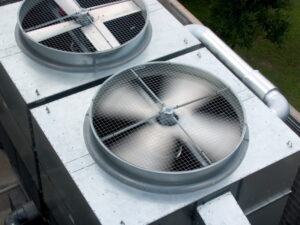
 Along with our great services for homeowners throughout North Central Florida, we also provide service for light commercial HVAC in Alachua, FL, and the rest of our service area. (Light commercial means systems 25 tons and under.) As local business owners ourselves, we understand the difficulties a company can face when their cooling systems give out in the middle of summer. You may depend on the AC to keep customers, clients, and employees happy, or the AC may do a critical job cooling down equipment. No matter how you use your commercial air conditioning, when it fails you’ll need our experts on the job to repair it.
You want to catch potential AC problems early, before they turn into a full system breakdown leaving your facility without cooling. This presents difficulties, because AC equipment usually sits on the roof of the building. But you still can watch for these warning signs that will tell you to call our team for repair service.
 One of the caution signs we tell homeowners about that will help them determine when they need repairs for their
  If you read the title of this post and thought, “A
  Your house is getting warm on a hot day, so you set the thermostat to switch on the air conditioning system. Soon, your house begins to feel comfortably cool, and the AC runs for as long as necessary.
  Summer weather means higher electricity bills for your house. There’s no way to avoid a rise in costs because the compressor that allows an AC to provide cooling draws on a great deal of power when it runs. The average central air conditioning system uses around 3,000 to 3,5000 watts an hour, adjusted up and down depending on the AC’s size. How much this costs you is predicated on the price of electricity in your area.
 When you think of harmful or irritating particles in your home’s air, what comes to mind first? Probably dust, dander, bacteria, viruses, and mold spores. These are all problems for indoor air quality and we recommend using air filters or a special
 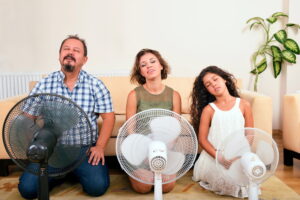 What do you expect from a central air conditioner in a house? The answer is simple: you want it to make the house cool and comfortable when the weather is hot. If the AC can’t do that, what good is it?
 In our past two posts, we wrote about the importance of having regular AC maintenance each spring. We could post plenty more about this topic, since it’s that important—you can have most of your potential AC problem vanish thanks to keeping up with maintenance. There is one AC problem you
 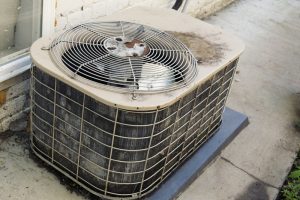 Our last post was our annual reminder about scheduling air conditioning maintenance every spring—or a bit before spring for Florida because of the way our seasons work. But we aren’t finished with all we have to say about AC maintenance yet. It’s important enough for a second reminder as well as some more in-depth information about what makes maintenance so critical.
 It’s not yet officially spring. That doesn’t happen until the third week of March. But Florida weather is Florida weather, and we have to be ready for hot spells at almost any time, and the season for air conditioning seems to start earlier each year. We’re sure you’ve used your AC a few times during the last couple of months, which is when people in many other parts of the country have their furnaces going full-blast through the day to fend off below-freezing temperatures.